

The MANGOS Ate My Business Plan

If an AI can build, market and run almost any digital service on demand, what exactly is left for the small business owner to do? Apart from choosing a logo, obviously.
There is a particular kind of idea I have had several times over the years. It usually arrives while I am doing something else, because apparently my brain regards brushing my teeth as an ideal time for venture-capital speculation.
“What if I built a website that did X?”
The idea is never entirely ridiculous. It is normally a service involving data, search, recommendations, a pleasing interface and perhaps a premium tier for people who would like the recommendations to arrive wearing a slightly nicer hat.
Recently, I had one about property. You could scrape the photographs from house listings, organise them by architectural style, and let people browse for interior-design inspiration. You could add room recognition, moodboards and eventually 360-degree virtual tours. There might be a subscription. There might be a tasteful little email newsletter. At some point, inevitably, there would be a dashboard.
Then the thought arrived: why would I build any of it?
A user could simply ask ChatGPT, or whichever assistant has won the current naming contest, “Show me design inspiration for a north-facing Edwardian sitting room with dark wood floors, low light and a budget that is best described as spiritually constrained.” The assistant could search, interpret, assemble examples, create a moodboard, find products and perhaps arrange the tradesperson. The entire business idea could be summoned conversationally, used once, and discarded like a paper plate at a village fête.
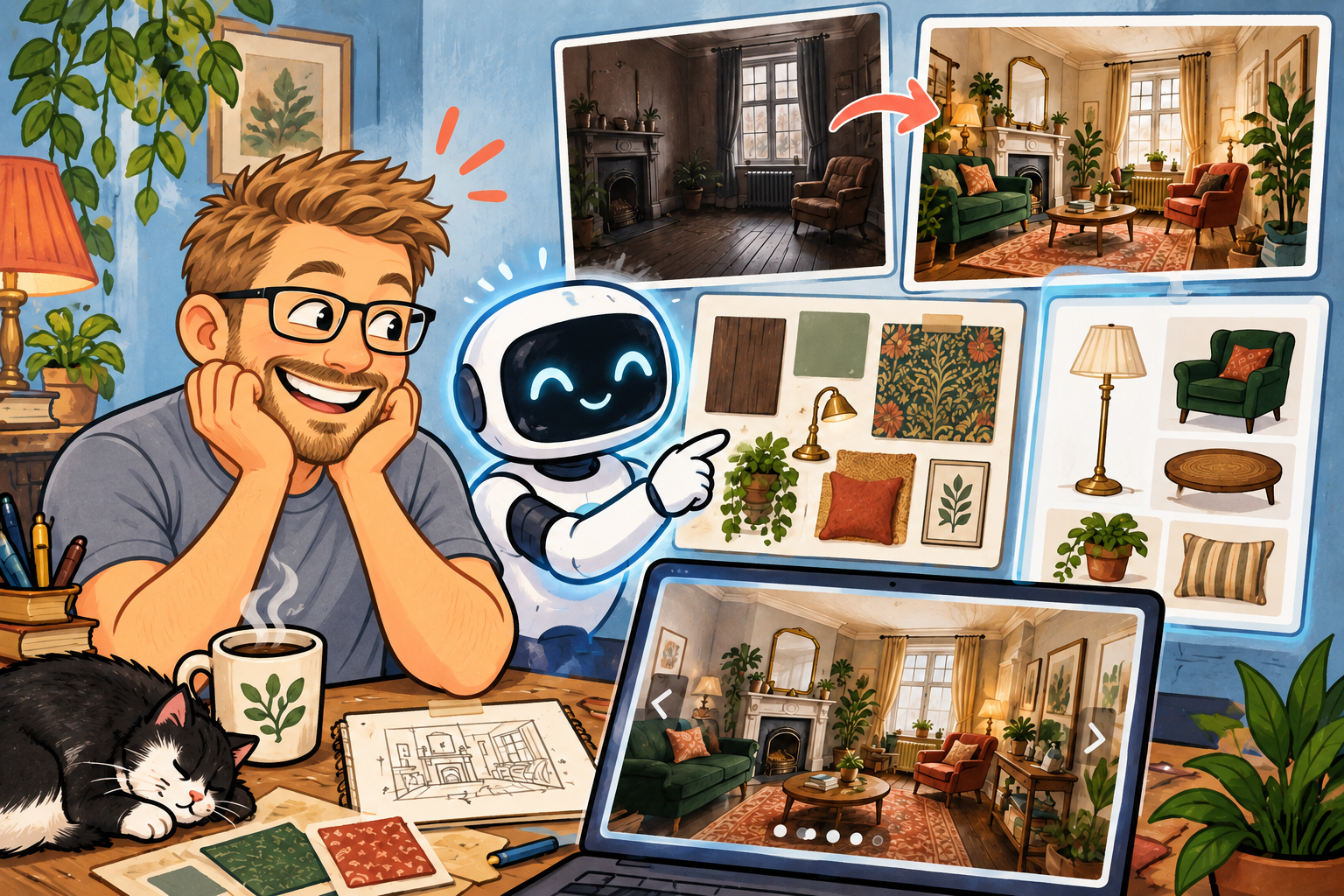
This is the interesting bit about AI. It is not merely making existing businesses more efficient. It is starting to make the business-shaped wrapper around a service optional.
The disappearing middleman
For much of the internet age, a digital business was a clever arrangement of components. Someone had to build the website, connect the database, write the recommendation engine, produce the content, handle the customer journey and make the whole thing look as though it had not been assembled at 1.30am using three cups of coffee and a mild sense of doom.
AI agents are steadily eating those components. Current tools can already give models access to browsers, files, code and desktop interfaces. OpenAI describes computer-use tools that can operate browser and desktop interfaces; Anthropic’s documentation similarly describes screenshot, mouse and keyboard control. The direction of travel is clear even if the reliability still occasionally resembles a distracted intern operating a photocopier.
That matters because the old justification for launching a small digital business was often: “Someone needs to combine these capabilities in one place.” Increasingly, the assistant itself can perform the combination at the moment the customer asks.
Why subscribe to a property-design website when an assistant can create the relevant research for your particular house? Why install a meal-planning app when an assistant knows your allergies, budget, supermarket and children’s astonishing hostility to vegetables? Why pay for a niche comparison tool when you can describe the decision and have one assembled in front of you?
The answer may be that specialised products remain better. They have persistent data, a polished experience, strong communities and a reason to return. But the burden of proof changes. The business can no longer assume that convenience alone is defensible. The assistant is convenience with a pulse.
The MANGOS problem
This raises a rather uncomfortable question about where the money goes.
If the assistants become the place where people ask, decide, buy and act, the platforms that control those assistants sit between customers and almost everything else. I have been calling the likely winners the latest acronym to emerge for these behemoth companies: the MANGOS (Meta, Apple, Nvidia, Google, OpenAI and SpaceX (I dunno, doesn't SpaceX feel a little out of place there..?)). It is not a perfect acronym, partly because there are obviously more than six of these types of companies and partly because acronyms are often what happens when a thought has been left in the oven too long.
The concern is not simply that these companies will own powerful models. They may own the interface through which demand is expressed. That is potentially more valuable. The assistant does not merely display businesses; it decides which businesses, products and services are relevant to a user’s request.
Today, a small company can compete for attention through search rankings, social media, advertising or a memorable shopfront. Tomorrow, it may need to be legible to an agent. Can the agent understand what it does? Can it trust it? Is its inventory machine-readable? Does it have the right permissions, integrations and reputation signals? The new shop window may not be a website at all. It may be a permission granted inside someone else’s operating system.
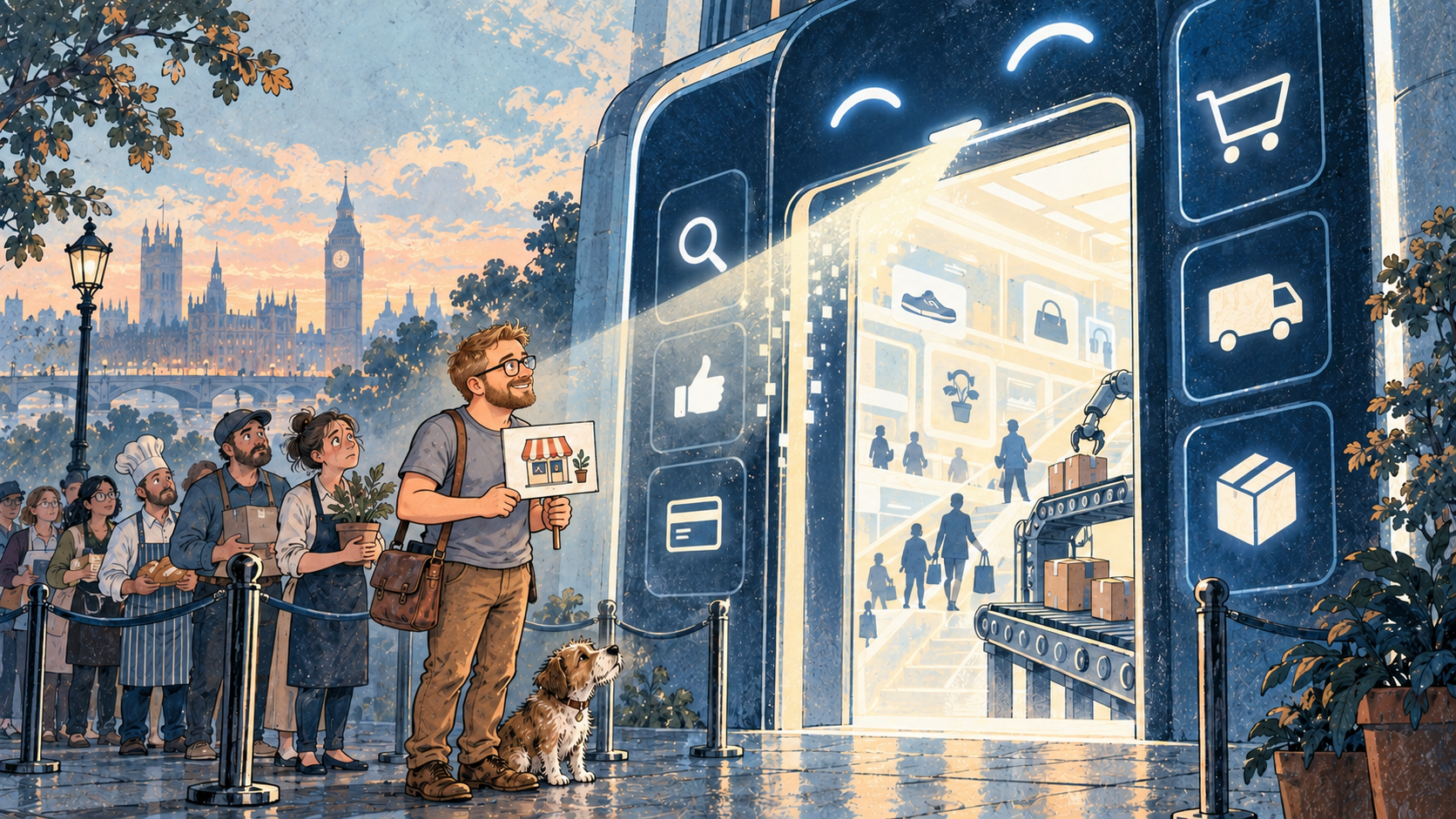
That sounds rather bleak for the independent entrepreneur, but it is not automatically the end of small businesses. It may instead split them into two types.
The first type sells execution that AI cannot easily commoditise: physical work, local relationships, taste, judgement, trust and accountability. The decorator who understands your house, the piano teacher who notices that your left hand is quietly staging a rebellion, the builder who turns up when promised. These businesses may use AI, but their value is not principally a collection of web pages and workflows.
The second type sells a distinctive point of view. People may still pay for curation, but not generic curation. They will pay for someone whose judgement they recognise. The future design business may not be “a database of beautiful rooms”. It may be “this particular person’s excellent, opinionated understanding of what makes a room work”. The product is not the archive. It is the filter.
The small business becomes a person
There is a strange possibility here: AI could destroy many small businesses while making individual people more commercially capable than ever.
One person might run a research service, publish a specialist newsletter, create tailored reports, maintain a community and provide an advisory layer, with agents doing much of the administrative and production work. The company would be tiny, perhaps just one human and a suspiciously large number of software assistants.
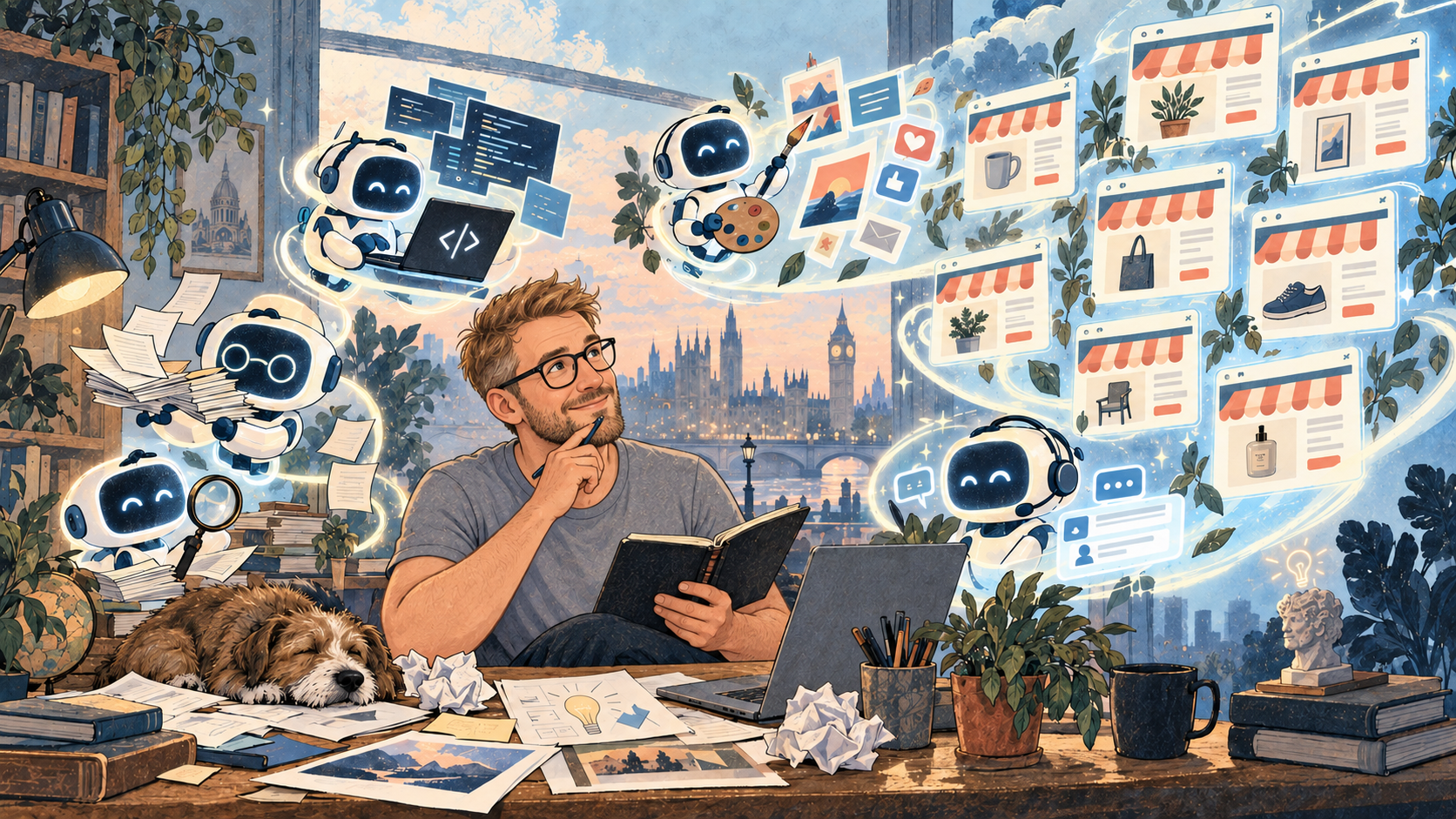
That is empowering, but it also creates an unpleasant competitive treadmill. If everyone can produce a professional website, polished branding, market research and a functional product in an afternoon, those things stop being advantages. The minimum standard rises. The internet fills with businesses that are technically competent and spiritually interchangeable.
In that world, originality, trust and distribution matter more. So does having a reason for anyone to care. AI can make the shop. It cannot, by itself, make people want to visit the shop rather than the other ten thousand shops that appeared during lunch.
My property-design idea might still work. But the valuable part would probably not be the scraping, the database or even the moodboard generator. It would be the taste, the community, the trusted recommendations and the fact that someone had made a hundred useful decisions before I arrived. In other words, the business would survive by becoming less like a tool and more like a relationship.
Which is irritating, because relationships are much harder to automate than dashboards.
The future may not be a world without small businesses. It may be a world where small businesses cannot justify existing merely because they have assembled some software. They will need to offer something with texture: a point of view, a reputation, a human connection, or a form of responsibility that a general-purpose assistant cannot comfortably fake.
So yes, AI may consume a great many businesses. It may also centralise a remarkable amount of money and power in the MANGOS. But perhaps the enduring small business will be the one that answers a question AI cannot fully answer: why should I trust you, specifically?
That is not a bad question for any business plan. It is also considerably more difficult to solve than adding a premium tier.