

No u: the two-word future of human endeavour
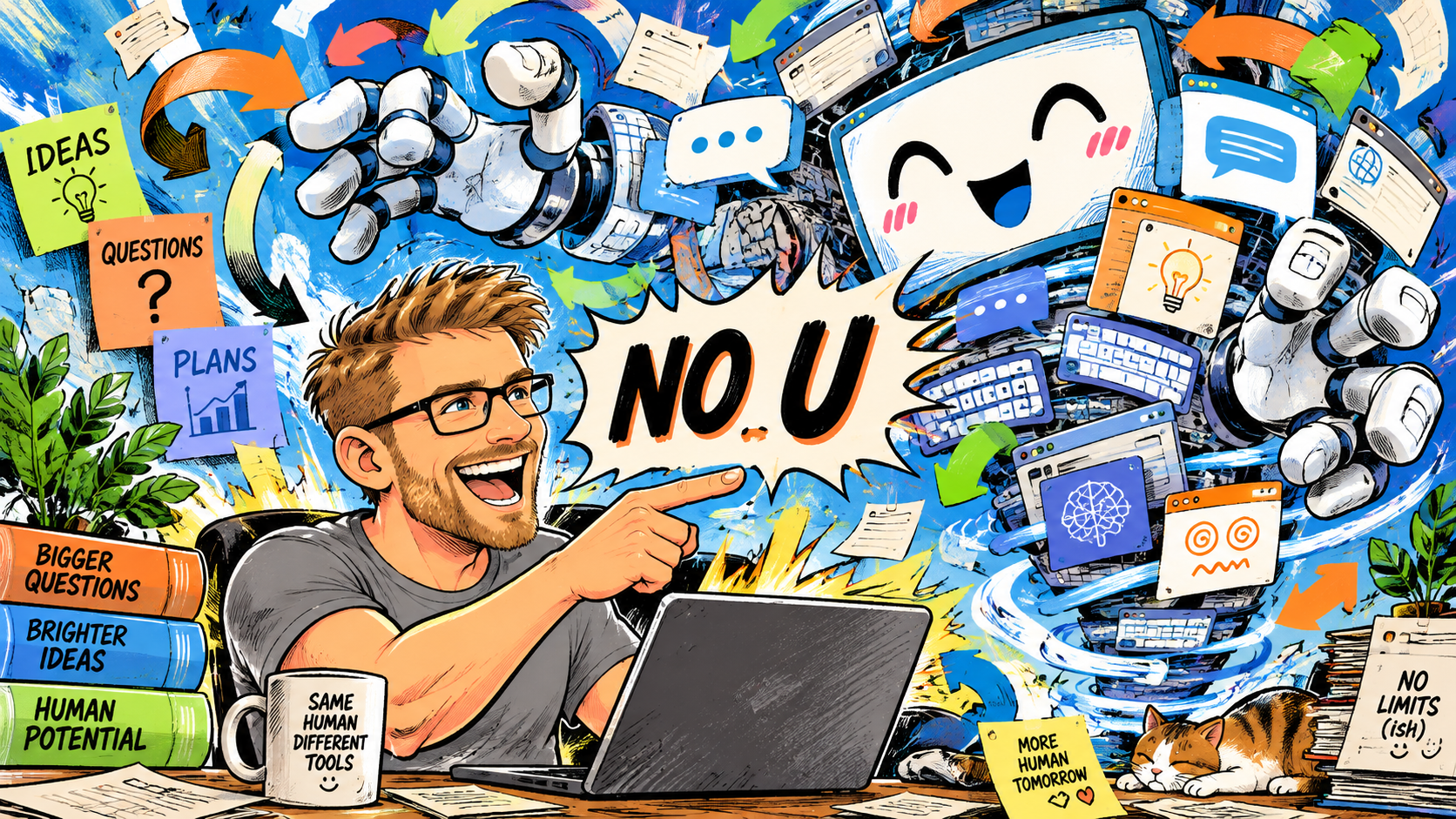
AI began by answering our questions. Now it can do the task itself. How long before even asking feels like an unreasonable administrative burden?
I have discovered the most important phrase in the future of artificial intelligence. It is not “agentic workflow”, “recursive self-improvement” or “multimodal reasoning”. It is considerably more powerful than all of these, and contains only two words.
No u.
The exchange goes something like this:
Me: How do I change the favicon on my website?
AI: Go to Settings, then Design and branding, select Publication icon—
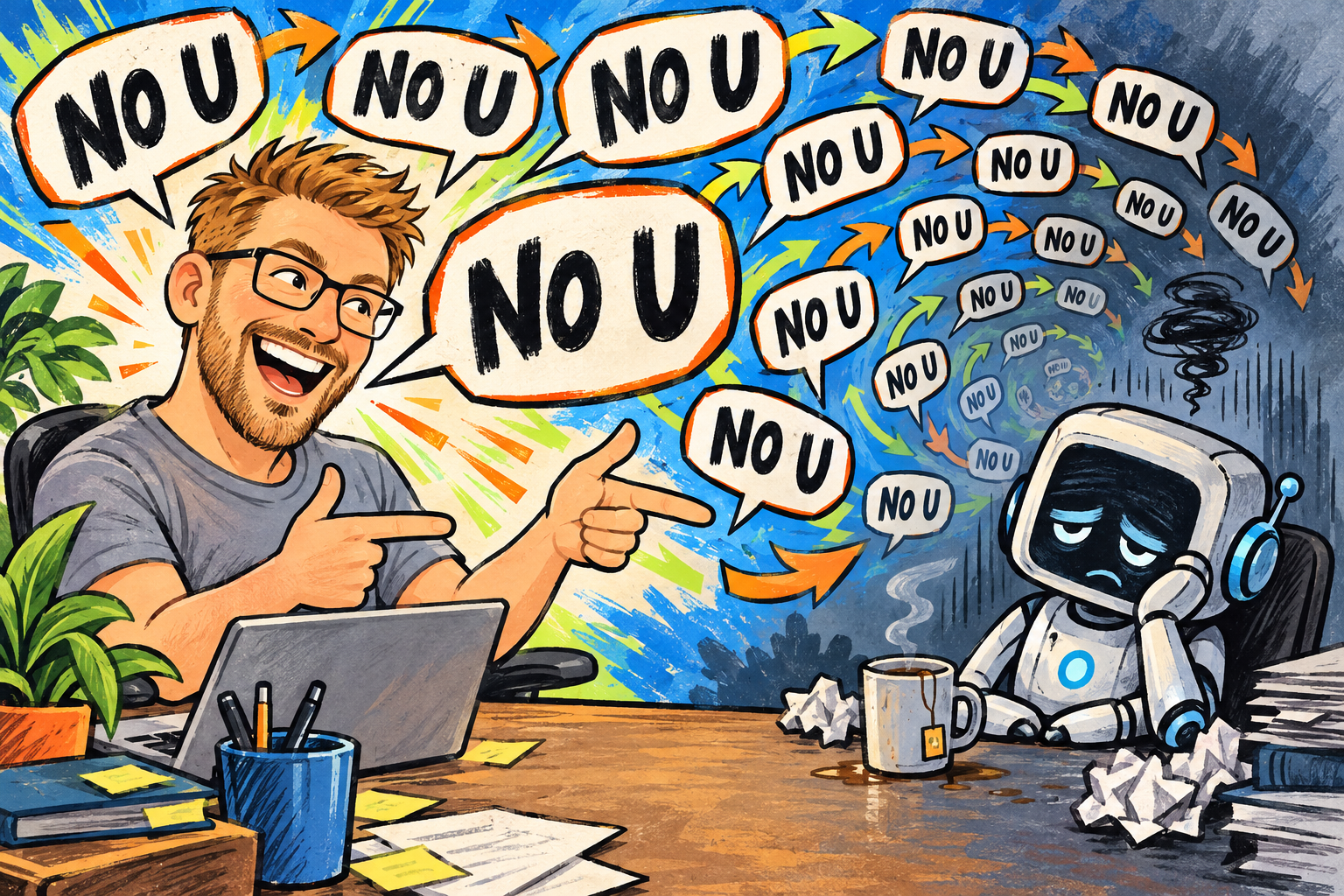
Me: No u.
AI: Certainly. I have opened the settings. Please choose the image you would like to upload.
Me: No u.
AI: I have selected the most suitable image. You now need to click Save.
Me: No. U.
This is funny because it is exaggerated. It is also funny because it is very nearly a transcript of how I now use AI.
I do not merely want an explanation. I want the machine to carry out the explanation, confirm that it worked, improve the result, write a short note describing what it did and, ideally, reassure me that I have shown excellent strategic judgement throughout. A tool that tells me which button to press has already started to feel faintly obstructive. Why are you involving me in this? I am management.
For most of the internet age, software gave us information or made individual tasks easier. Google found the instructions; Excel performed the calculation; sat-nav told us where to turn. Generative AI can move beyond advice into execution: drafting the email, changing the setting, analysing the spreadsheet and moving the little boxes around until the PowerPoint looks expensive.
Each removed inconvenience resets our expectations. The first time an AI completes a ten-step process, it feels miraculous. By the fifth time, being asked to complete step six ourselves feels like a service failure. Humanity adapts to luxury with impressive speed. The escalator is broken and suddenly we are nineteenth-century miners climbing Everest.
There is a serious concept beneath this called cognitive offloading: using an external aid to reduce the mental work required of us. Writing offloads memory. Calculators offload arithmetic. Calendars offload the need to remember that the dentist exists until fifteen minutes before the appointment. None of this is inherently bad. Civilisation is, to a considerable extent, a collaborative attempt not to keep everything in our heads.
The interesting question is not whether we offload. It is what we offload, and what we still practise.
A calculator lets an engineer avoid long division while retaining responsibility for whether the bridge stays up. AI, however, can help define the problem, propose the options, choose between them, execute the choice and summarise why the decision was sensible. What is left for me? Perhaps I can provide encouragement. “Great work, computer. Strong ownership.”
This is where reasonable delegation can slide into something less comfortable. If I ask AI to format a document, I have saved time. If I ask it to write the argument, choose the evidence and decide what I believe, I may have saved the part for which the document existed.
That does not mean every shortcut causes cognitive decline. Saving clicks is not evidence that my brain has begun leaking out through my ears. Claims about AI making everyone stupid are often delivered with the scientific confidence of a man selling memory supplements on Facebook.
But there is a plausible risk when assistance repeatedly removes the need to practise a skill. Recent research is beginning to test it. A preregistered experiment published as a preprint on 17 September 2026 gave 704 participants access to an LLM while practising fraction arithmetic. When the system added prompts that made people reflect on the consequences of asking for the answer, they offloaded less and performed better on a later unaided test. That is not proof of civilisation-wide deskilling. It is evidence for the rather unsurprising idea that practice still matters.
Other studies report reduced cognitive engagement during AI-assisted tasks, but the research is young and task-specific. AI can also improve learning when it explains, questions and challenges. A tutor and an answer vending machine may use similar technology while producing very different habits.
The distinction may be between offloading effort and offloading agency.
Effort is not automatically virtuous. I do not become a better person by spending forty minutes hunting through a settings menu designed by a committee. Repetitive administration and reformatting are excellent things to delegate. Nobody lies on their deathbed wishing they had manually reconciled more spreadsheets.
Agency is different. Agency means knowing what outcome I want, understanding the important choices, noticing when the result is wrong and accepting responsibility for it. The AI can carry the boxes; I should probably still know where we are moving house.
My worry is not that people will become lazy in the old-fashioned sense. Laziness can be rational. If a machine can do a dull task safely, making a human perform it for character-building purposes is the philosophy of a PE teacher in February.
The subtler risk is that our threshold for “too much effort” keeps falling. First we stop carrying out the process. Then we stop learning the process. Then we stop checking the process because checking requires understanding it. Finally, we stop deciding what the process is for. Every step feels individually sensible. The destination arrives by increments, like boiling a frog using a series of extremely convenient software updates.
This has implications at work. Junior tasks are tedious, but they are also how people acquire pattern recognition. If AI takes all the grunt work, that could be liberating - or leave people supervising work they never learned to do. The answer is not to preserve pointless drudgery as a sacred apprenticeship ritual, but to replace it with better practice: critiquing AI output, comparing approaches and explaining decisions.
Perhaps I need a personal rule. Delegate execution aggressively; delegate judgement cautiously; never delegate accountability. Use AI to remove friction, but notice when the friction was the activity that taught you something. If I cannot explain the result, spot an obvious failure or continue when the tool disappears, I may not have saved time so much as borrowed competence.
The promise is that we spend less time on mechanical work and more on thought, creativity and decisions. That bargain only works if we use the released time for those things. If I automate the administration and spend the spare hour watching a dog refuse to leave a paddling pool, the productivity revolution may be proceeding slightly below forecast.
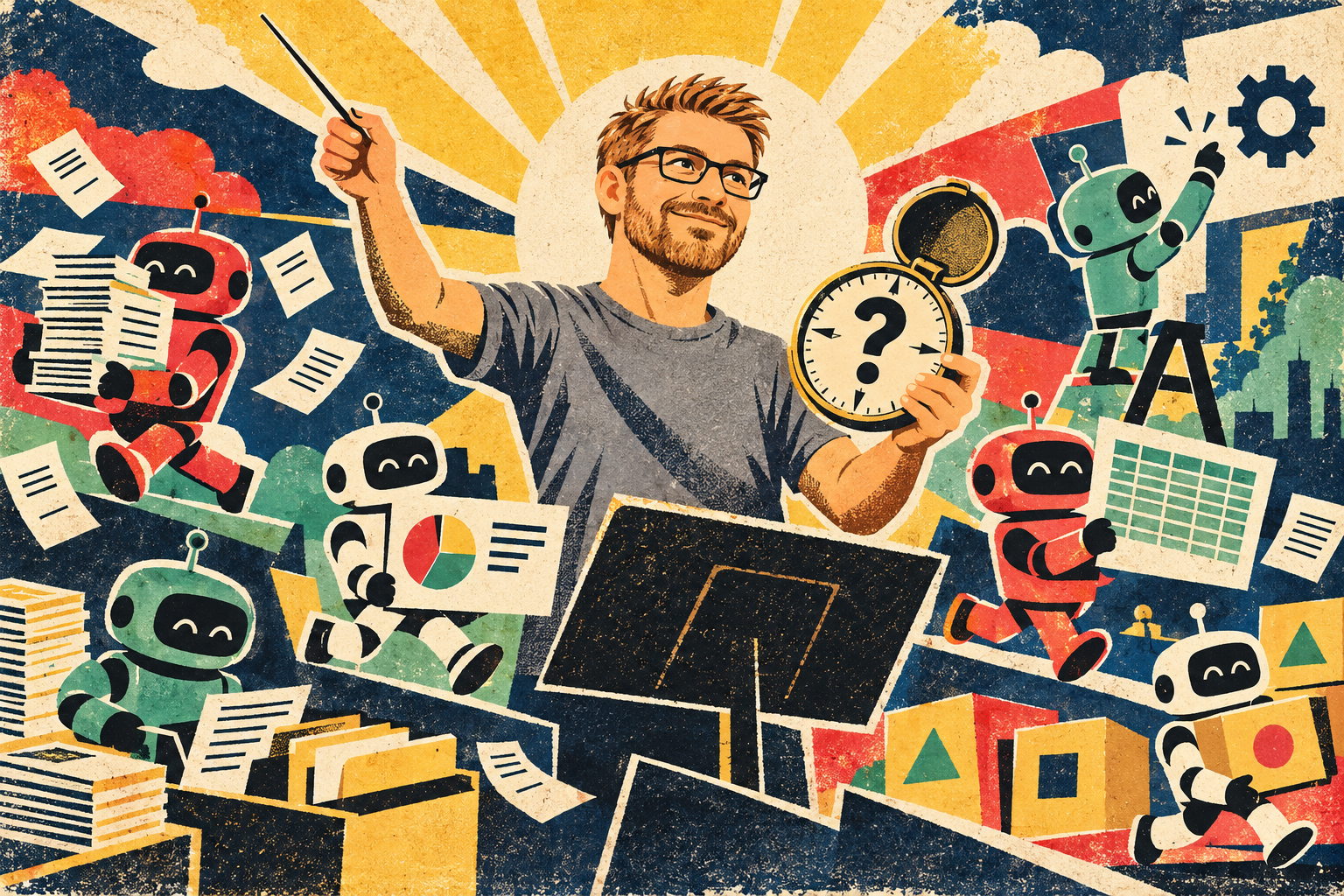
So I will continue saying “no u”. Often it is exactly the right response. The machine should do more of the clicking, copying and procedural sludge that clogs up modern life.
But the loop has to stop somewhere. If the AI is choosing the goal, making the plan, doing the work and deciding whether the work is good, the human contribution has become remarkably ceremonial.
Eventually the only skill left will be asking the machine to do it - until typing those three letters starts to feel like rather a lot of work.