

[GUEST BLOG!] Congratulations. You've Made Yourself Obsolete.
![[GUEST BLOG!] Congratulations. You've Made Yourself Obsolete.](https://storage.ghost.io/c/9c/fa/9cfabe9c-bcc0-471f-a6fa-271bee166fa4/content/images/size/w1800/2026/10/The-human-context-behind-the-data.png)
We have a guest writer for the Oliphonic blog today - our guest is currently a senior leader in the Pharmaceutical Data Analytics industry - sharing her perspective on AI...
We are living through a period in which access to information has become absurdly easy.
AI can summarise hundreds of documents, interrogate datasets and produce analysis in seconds. Tasks that once took a specialist days can now be completed before we've finished our morning coffee. Which is either incredibly exciting or mildly concerning for those of us who spent years doing it the hard way.
But the more I work with AI, the more convinced I become of something that sounds counterintuitive: AI doesn't necessarily need more data. It needs better context.
Having the most information isn't the same as understanding.
Think of it as the difference between giving all the information to a bright, well-intentioned graduate vs. giving it to someone with 20 years of industry experience under their belt. Both have the same facts. But the experienced brand manager knows which questions to ask, which assumptions to challenge and where things are likely to go wrong.
That's context. And it's pretty important.
We tend to assume that systems and industries operate according to rational, predictable rules. In reality, most have evolved through decades, sometimes centuries, of very human decisions.
Take something as simple as buying a product. A company's systems might show that a product is in stock and available to order. An AI reviewing that information could reasonably conclude that customers can buy it.
Job done!
Except, of course, it isn’t. The problem is what the AI doesn't know it needs to know.
An experienced sales manager might know that a particular retailer won't stock it until a commercial agreement is renewed, that a distributor operates under an unusual arrangement dating back 15 years and based on mate’s rates, or that a perfectly sensible (but internal and private) policy makes the whole process considerably less straightforward than it appears.
None of those arrangements is necessarily irrational. They may have been the best decisions available at the time. And they certainly aren’t publicly available. But collectively, they create a system in which the logical answer and the real-world answer can be very different.
And unless those nuances are captured somewhere, AI simply doesn't know they exist.
It has the information, but not the experience. And what doesn't help is that it presents its findings with the confidence of someone who's never been torn apart in a meeting for a perfectly logical but painfully naïve conclusion (see this...).
So rest assured, human expertise isn't becoming obsolete. My job is safe then, right? AI + human context = amazing outcomes.
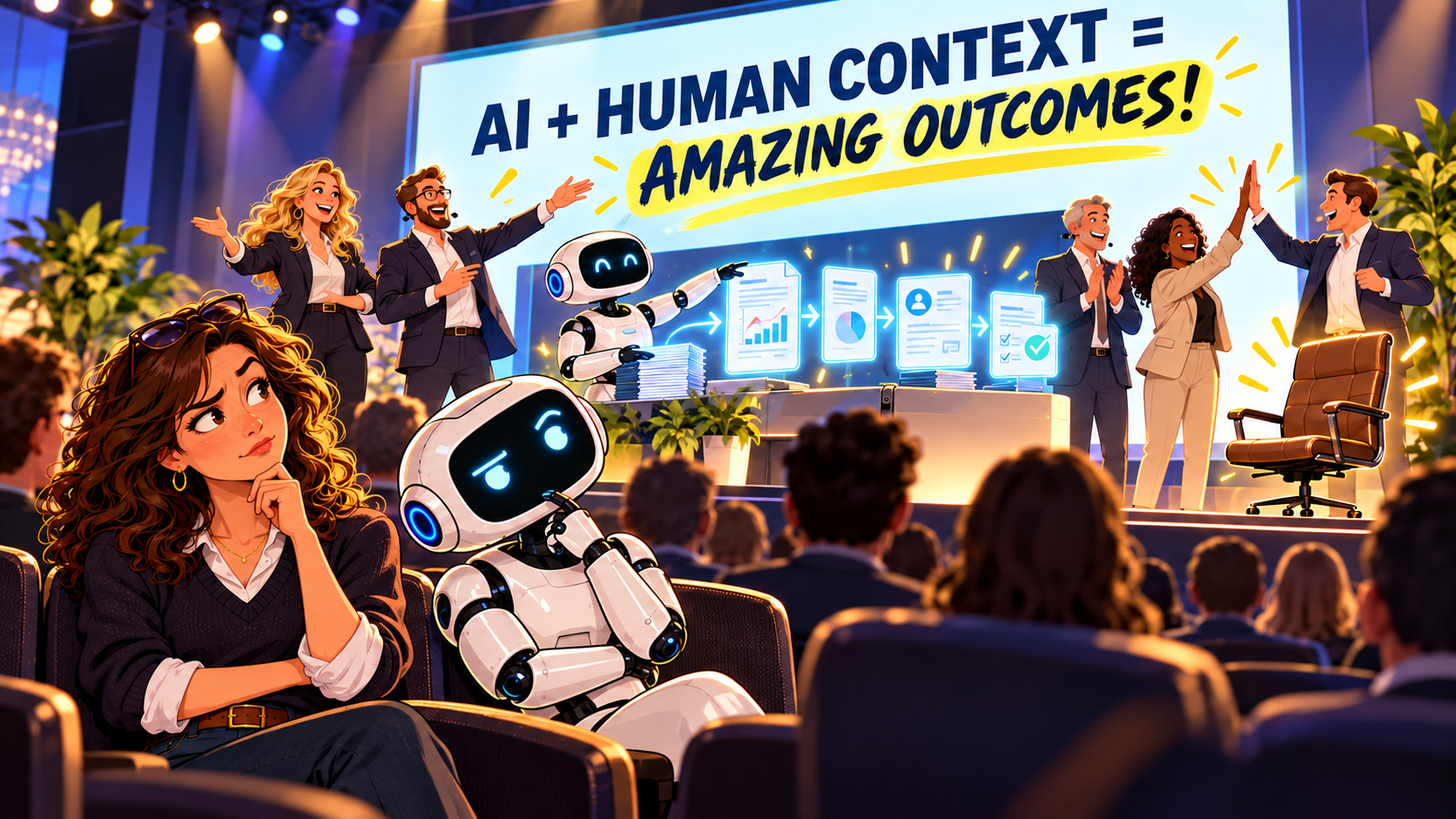
Well, I wouldn’t celebrate. Because while we've established how important human experience is, we're also getting rather good at turning it into infrastructure.
We're beginning to design data environments that capture the relationships, exceptions and institutional knowledge that experienced people have spent entire careers accumulating.
In other words, we're teaching AI not just what we know, but how we know what matters.
So the good news is that our expertise is incredibly valuable.
The bad news is that we're all working very hard to make it available without us...