

AI - when is it cheating or not?
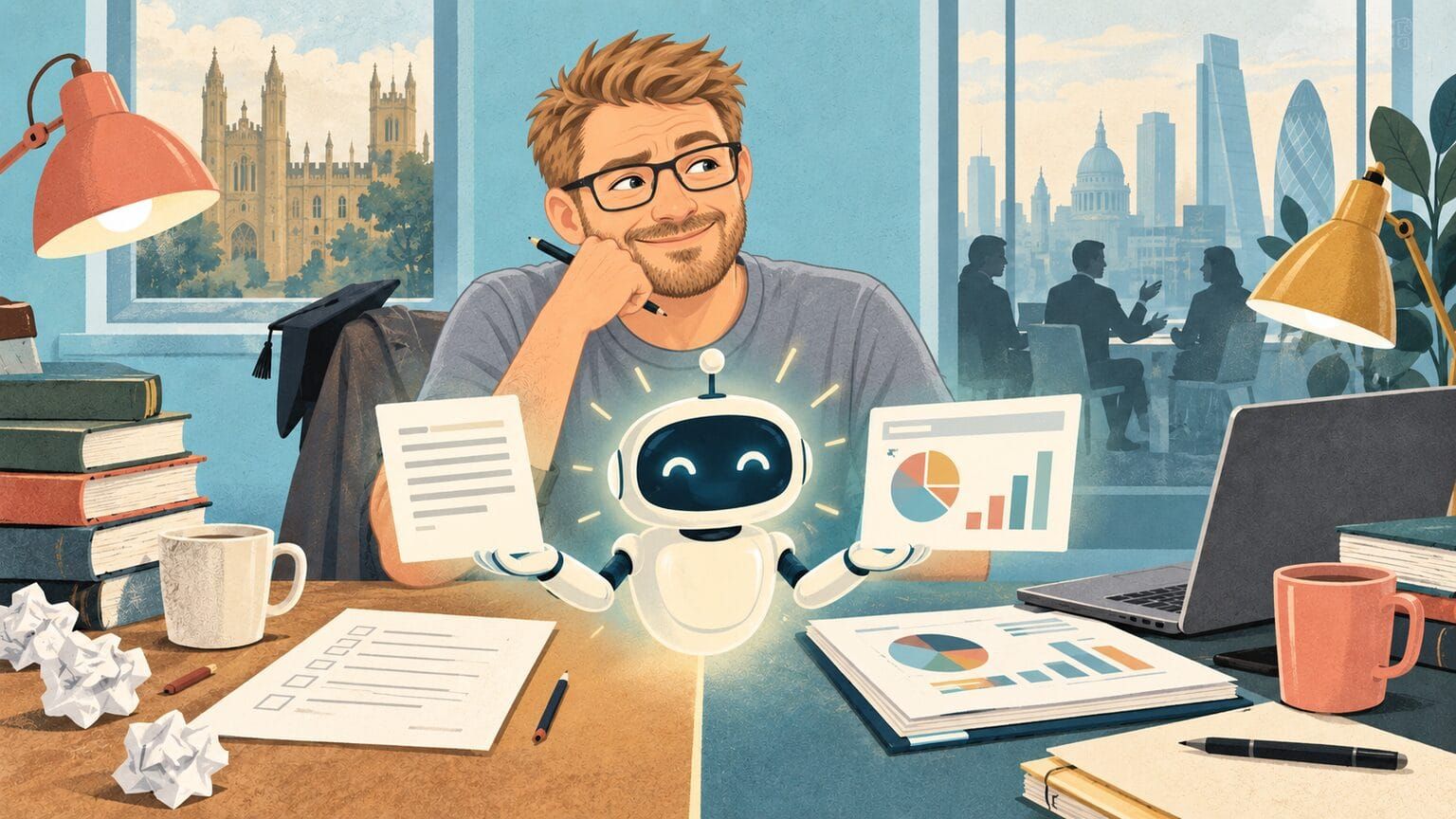
The moral gymnastics of using AI to get a better mark — and why the same behaviour acquires a rather more respectable haircut in consulting.
There is a particular kind of sentence that intelligent people produce when they are about to do something they know is questionable: “It is only…”
It is only borrowing it. It is only until payday. It is only a white lie. It is only cheating when you are still at university.
The last one is increasingly popular because it contains just enough truth to feel adult. University is supposed to assess what you know. Work is supposed to produce an outcome. If artificial intelligence can help you produce the outcome faster, why on earth would anyone object? We do not accuse consultants of cheating because they use PowerPoint templates, calculators or colleagues who know how to make a pivot table behave.
And yet there is a fairly important gap between “helping me think” and “quietly impersonating me”. It is a gap large enough to contain an entire ethics committee, several panicked lecturers and, probably, a management consultancy slide entitled *AI-enabled integrity framework*.
The rationalisations are familiar. Everyone else is doing it. The rules are old-fashioned. The assignment is testing obedience rather than intelligence. I understand the material anyway. I was only asking it to tidy the prose. I was going to check it. It would be unfair to fall behind people who are using it. The university is charging me nine thousand pounds a year, so technically the chatbot is a learning resource.
None of these thoughts is completely absurd. That is what makes them dangerous. The mind rarely presents us with a cartoon villain twirling a moustache. It offers a sensible little memo explaining why this particular shortcut is different.
The strongest temptation is fear. If other students are using AI and you are not, refusing it can feel less like integrity and more like volunteering to run a race while carrying a moral philosophy textbook. A high mark becomes the visible objective; learning, which is slower and much less photogenic, becomes an optional extra.
There is also the low perceived risk of detection. If the work comes back with a first-class mark, the system appears to have confirmed that it was acceptable. We are very good at mistaking an absence of consequences for an absence of wrongdoing. The burglar who is not arrested does not thereby become a property consultant.
This is why the recent Brown University story is so interesting — and why it needs handling carefully. Economics professor Roberto Serrano reported that a take-home midterm produced an average around 96 per cent, followed by an in-person final averaging 48.6 per cent. He suspected that many students had used AI on the midterm, and the contrast certainly looks alarming. In an understandable flourish of academic theatre, the final became the moment when the class was invited to prove him wrong.
But suspicion is not proof. No individual student can be convicted by the shape of a graph. A subsequent analysis of the publicly released scores found a very weak relationship between each student’s midterm and final performance, but also stressed that the scores cannot identify which students used unauthorised assistance, or establish that AI was the cause. The final may have differed in difficulty or content; students dropped the course; anxiety and other factors may have mattered. The data are suggestive, not a list of guilty names.
This also means we should resist the tempting story that the “clever” students cheated and the “stupid” students did not. Two scores do not tell us who was intelligent, who panicked, who revised, who slept, who had a bad day or who happened to be unusually good at writing answers in the language of an enthusiastic robot. A numerical pattern can raise a question without answering it.

The broader question is not whether AI assistance is always wrong. It plainly is not. Asking a model to explain a difficult concept, challenge an argument, suggest counterpoints, identify a gap in a draft or improve clumsy grammar can be entirely legitimate, depending on the rules. A student who uses AI as a patient tutor may be learning more, not less.
The boundary is misrepresented expertise. If I submit an answer I cannot explain, I have not merely used a tool. I have claimed a level of understanding I do not possess. The problem is not that a machine touched the work. The problem is that the final product is being used as evidence about me when it is not, in any meaningful sense, mine.
This becomes less clear-cut in consulting, where the deliverable is usually meant to help a client make a decision rather than demonstrate whether I personally know how to draw a three-layer operating model. If AI helps me structure a workshop, compare options, draft a first pass or turn a thicket of notes into something readable, that can be sensible. The client is paying for judgement, relevance, challenge and accountability — not for the ceremonial hand-cranking of every sentence.
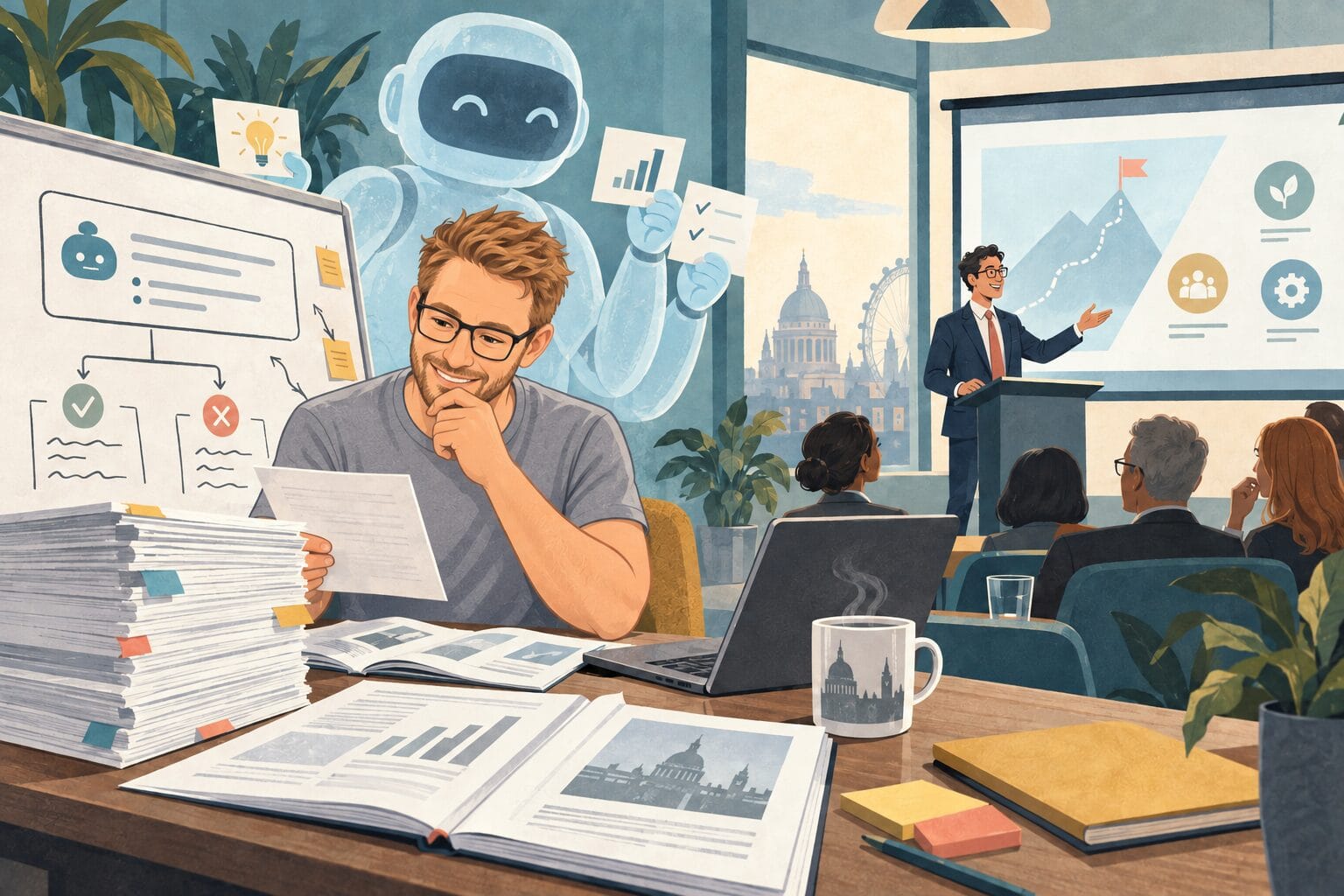
But the same permission has a boundary. I should know what the deck says. I should have checked the numbers, understood the recommendation and be able to answer the client’s awkward follow-up without turning slowly towards my laptop like a Victorian gentleman hearing a noise in the attic. If the chatbot invents a fact, I own the embarrassment. If the logic is weak, “the model wrote it” is not a defence; it is merely an unusually efficient way of announcing that I was not doing my job.
Perhaps the distinction is four questions: was I allowed to use AI, have I represented its role honestly, do I understand and verify the output, and am I willing to be accountable for the result? The answers need not always be yes in exactly the same way. A brainstorming session is not a regulatory submission. A student’s assessed proof is not a draft agenda. Context matters. But pretending context does not matter is how we end up with both sanctimony and nonsense.
University may be one of the last places where the process itself is the point. Professional work is often more outcome-focused. That does not make integrity irrelevant; it changes what integrity requires. At university, the work is evidence of learning. At work, the work is evidence of judgement. In both cases, passing off unexamined output as your own creates a gap between what the artefact claims and what the person can actually do.
So here is the irritating question I keep returning to: if you cannot explain the deck without the chatbot, what exactly is the client paying you for?
Perhaps the answer is still “quite a lot”. AI can make a capable person faster, broader and less trapped in the swamp of formatting. But capability cannot be outsourced wholesale. At some point the machine has stopped being an assistant and started being the professional. And if it is doing the thinking, checking, explaining and defending, it may reasonably ask for the fee.